From the customer-facing experience to the systems operating behind it.
TERVYN / OPERATIONS LAYER All systems operational
01 Incoming call
New inquiry00:42 · Voice agent
Caller
“I need to schedule a consultation next week.”
Agent
I can help with that. Which day works best?
02 Workflow
✓
Request understoodIntent · Consultation
Lead qualifiedRequirements captured
AppointmentAwaiting confirmation
03 CRM record
NI
New inquiryQualified opportunity
Updated
Source
Inbound call
Service
Consultation
Owner
Sales team
04 Human control
Approval required
Send appointment confirmation and create opportunity?
InventoryAttention
3 items below thresholdPurchase draft prepared · Not submitted
TodayLive
18Inquiries
11Qualified
7Scheduled
Operational diagnosis
Not another layer of software. The right system for the work.
Many businesses run through a mixture of spreadsheets, WhatsApp messages, generic subscriptions, manual copying and disconnected tools. We replace or connect those fragments with one deliberate operating layer.
Capability system
Engineering across the operation.
AI is one capability inside a complete product and systems practice—not a widget added after the fact.
01 / BUILD
Product engineering
Products and platforms designed as coherent systems, from architecture to the interface people use.
SaaS products
Customer portals
Web applications
APIs
Mobile & desktop
release/production
Releasev2.8.0Ready
✓ Tests passed 128
✓ Build complete 42s
✓ Health checks 6/6
02 / ORCHESTRATE
Intelligent operations
Automation for repeatable work, with AI used where interpretation—not just rules—is required.
AI agents
Workflow automation
RAG systems
Document intelligence
Approval controls
agent/run
Review the supplier invoices and flag mismatches.
1Read documents14 invoices indexedDone
2Compare purchase orders3 differences foundDone
3Request reviewNo changes made automaticallyWaiting
03 / RESPOND
Customer systems
Connected service and sales systems that carry context from the first conversation to the next action.
Voice agents
Chatbots
CRM workflows
Lead qualification
Support automation
customer/call
Call in progressInbound · 01:24
Live
Intent
New inquiry
Qualification
Complete
Next action
Warm transfer
04 / OPERATE
Business infrastructure
Operational software that replaces fragmented tools with reliable data and clear responsibility.
ERP systems
Inventory & purchasing
Internal dashboards
Reporting
Integrations
operations/stock
Stock health92%
Low stock3 itemsReview
Purchase orderDraft PO-1042Pending
Tervyn products
Products we are building.
Owning products keeps architecture, usability and long-term operation tangible—not theoretical.
Pharmacy operating system
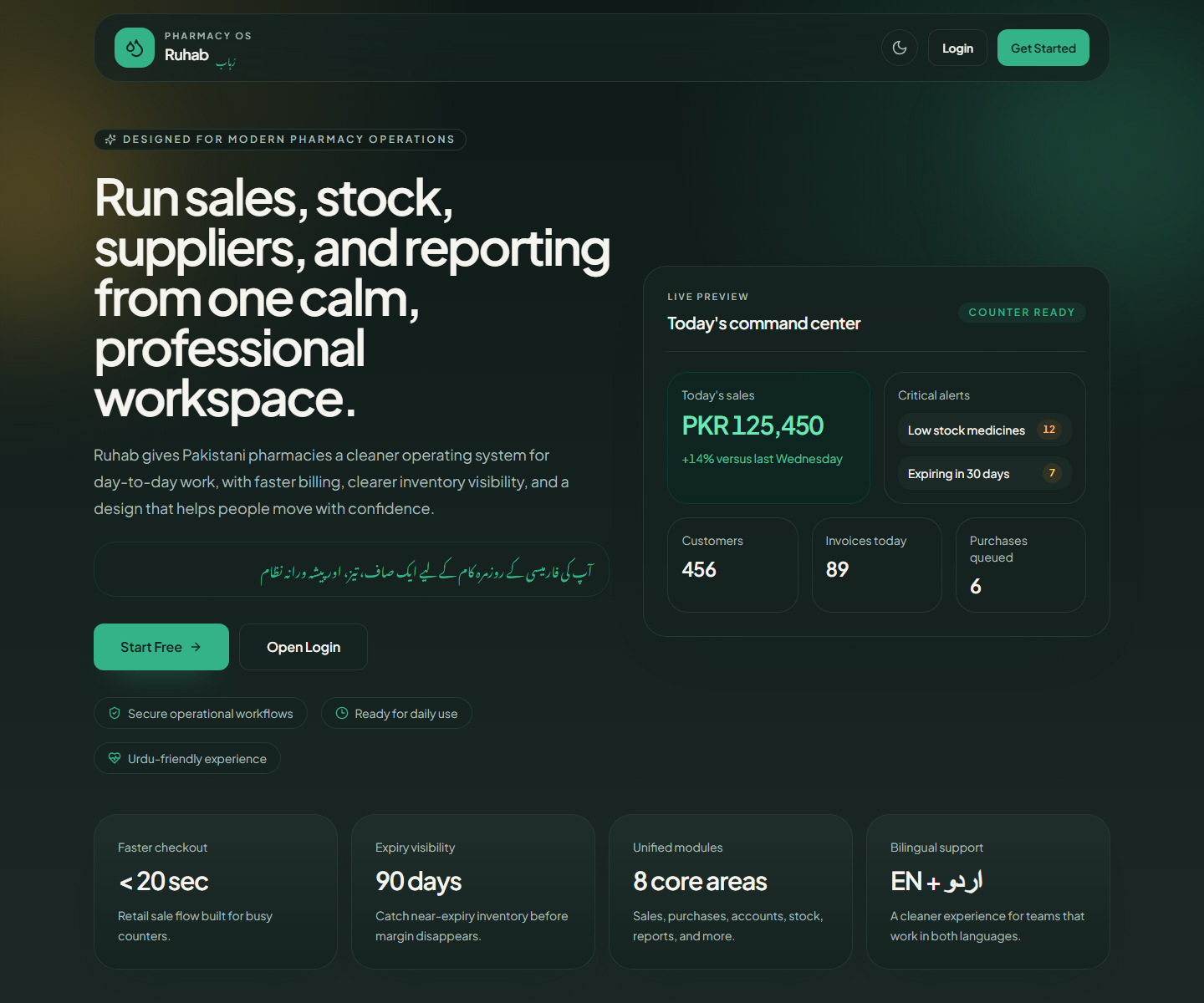
Ruhab
A calm, bilingual operating system for modern pharmacies, covering sales, inventory, suppliers, medicine batches, expiry visibility, customers, credit and reporting.
Tell us where work is still being copied, chased, repeated or lost. We will help determine whether the answer is better software, automation, AI or a simpler process.